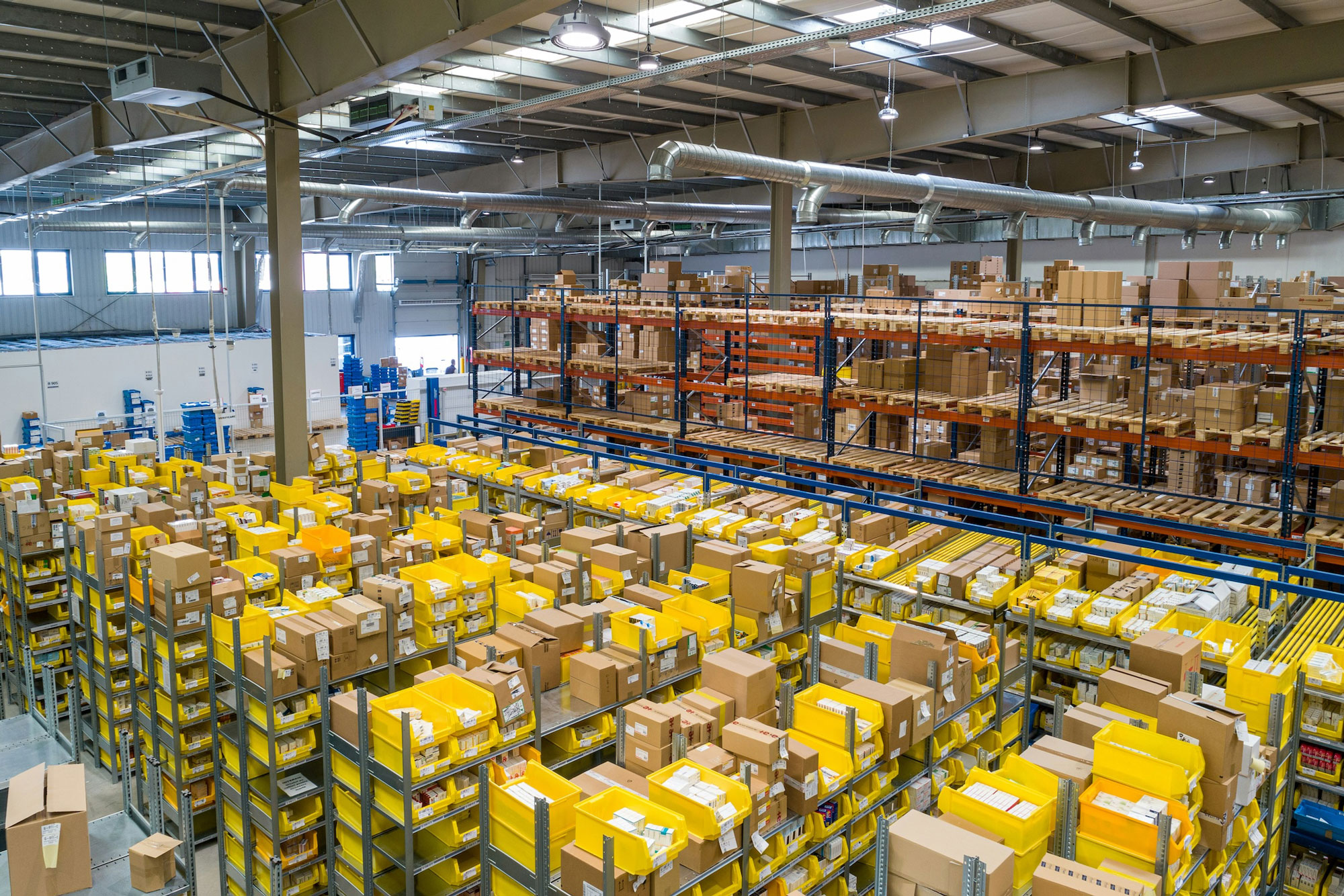
Across many industries, the last mile has quietly become one of the most consequential parts of the modern supply chain. It’s no longer about simply getting products to customers quickly. Many organizations now depend on deliveries that must arrive within very specific windows, with zero defects, complete traceability, and full accountability.
For these businesses, a late or mishandled delivery is not a customer-service slip. It’s a clinical disruption, a compliance risk, a production failure, or a financial event with cascading consequences. For this reason, our new white paper outlines why Scaled-Precision Logistics has become a strategic imperative, why traditional carrier models fall short, and a starting place for a new architecture and requirements.
A Structural Shift and the Struggle to Keep Up
In pharmaceuticals and life sciences, on-time delivery is a clinical requirement. Delays can jeopardize product integrity or violate FDA and DEA protocols. Foodservice operators face spoilage, menu outages, and lost revenue when even short delays occur. In industrial environments, a halted production line can cost tens of thousands of dollars per minute.
Delivery performance has also become a strategic lever. According to research in the white paper, 84% of B2B buyers say delivery performance influences contract renewal. A negative delivery experience can cut Net Promoter ScoreSM by 31%.
Read more and you will discover that precision is now a fundamental expectation.Yet despite surging demand for tighter delivery windows, most legacy delivery networks were designed for a different purpose.
National parcel carriers are optimized for density rather than precision. Their hub-and-spoke systems cannot consistently support two-hour windows across major metros.
Regional carriers provide more flexibility but often serve only limited markets. Many rely on subcontractors, which creates gaps in standards, compliance, training, and consistency.
Crowdsourced delivery models introduce new challenges. Service quality varies widely. Visibility is limited. Professionalism and chain-of-custody controls are difficult to guarantee. These shortcomings make gig-based models unsuitable for high-stakes or regulated deliveries.
Many enterprises attempt to compensate by stitching several providers together. The result is often a fragile patchwork network that creates more complexity and operational risk.
The New Requirements for Modern Precision Logistics
Organizations reassessing their logistics infrastructure are beginning to align around a shared set of non-negotiable requirements:
- Time-definite reliability
- Scale with local precision
- Full visibility and predictive control
- Compliance and chain-of-custody integration
- A professional, controlled workforce
- Adaptability and disruption readiness
These requirements reflect a growing shift. Precision logistics can no longer be bolted onto traditional parcel networks. It needs a purpose-built model.
The white paper introduces a framework that outlines what this new architecture must include. The principles center on hyperlocal infrastructure, professionalized workforce control, asset-backed operations, and real-time orchestration across the entire supply chain. It’s an approach that reframes the last mile as a strategic extension of the customer experience and a stabilizing force within the broader supply chain.
Why This Conversation Matters Now
Industries dependent on high-stakes deliveries are entering a turning point. Customer expectations continue rising. Operational environments are becoming more complex. The organizations that succeed will be the ones that treat precision logistics as a strategic capability rather than a downstream operational burden.
The full white paper explores the structural gaps in today’s delivery ecosystem, the architecture required to support two-hour reliability at scale, and the evaluation framework enterprises can use to design or modernize their networks.
Download the white paper to explore the Scaled-Precision Logistics Framework and what it means for the future of high-stakes delivery.




For more information
Be the first to know about releases and industry news and insights.
Optimize your delivery strategy today
Schedule a call to explore solutions that drive real results.
Schedule a Call